
Blog
Coffee Row: Planning and Preparing for an Ever-Changing Sky
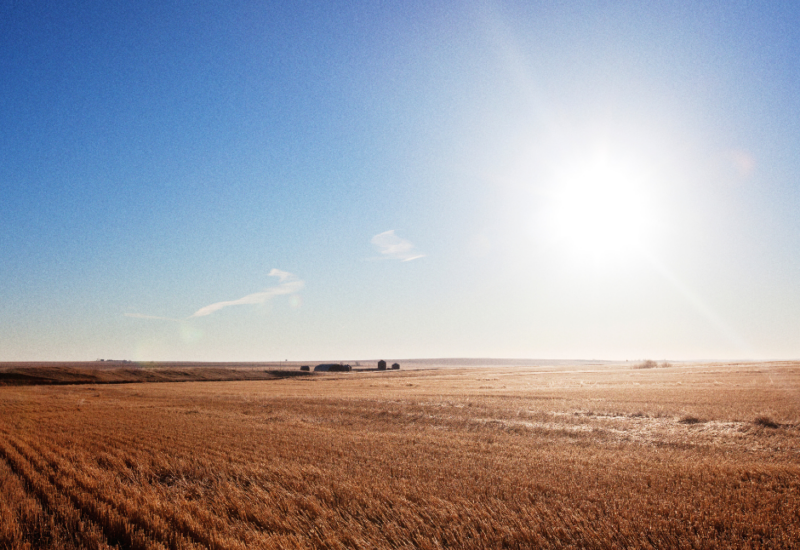
Monitoring weather patterns helps farmers to prepare for the unexpected as the weather can impact every decision, every crop and every acre on the farm. As growers approach the middle of the growing season, they are considering how the ever-changing sky plays a role in their fields. We sat down with agronomists and farmers to uncover the opportunities and challenges that come with this year’s weather conditions.
Cody Hatzenbuhler, Pan Ag, Bismarck, ND

“This year is distinctly cooler compared to past seasons. Just two days ago, morning temperatures were around 47°F, significantly below the typical 60°F we expect at this time of year. This anomaly is causing our warm season crops to eagerly await warmer temperatures before they can resume normal growth. It is certainly an interesting year for agriculture.
In my experience working with the farmers here, we have never really held back on using fertilizer. Typically, we might consider reducing application during dry conditions, but this year in the Dakotas, we received sufficient snowfall early on, providing excellent surface moisture right from the start. This set us up well for a promising crop season.
In this region, applying additional fertilizer in the summer is crucial—especially as we rely on consistent moisture in June and July to support that extra input. Despite the currently low commodity prices, everyone is still focused on enhancing their yields and are actively pursuing this goal as we move further into the growing season.”
David Renkas, Parkland Agronomy, Ituna, SK

“From what I am observing, much of our current success stems from the groundwork we laid in the spring. We were fully prepared, with all prescriptions in place, and had a clear understanding of our soil fertility levels. Over the past few years, we have consistently received good moisture and have yielded successful crops, allowing us to capitalize on opportunities that other areas of the province could not. Generally, our yields have been solid—typically average or slightly above.
While our canola yields might have dipped, our wheat yields have increased, and both oats and barley have performed steadily. Overall, we are in a strong position. Our cash flow remains healthy, and with everything planted and the recent rains, we are mainly sticking to our original plan. We have laid a strong foundation with heavy fertility in the soil, which has us in pretty good shape overall.
However, to be honest, this spring has presented challenges. It has been windy and cold, with intermittent light rain—conditions that are far from ideal for spraying. As a result, we have fallen somewhat behind on our spraying schedule. On the flipside, the cooler temperatures have slowed crop growth, which has paradoxically allowed us to keep up with necessary treatments. We just need a week of warm weather to really boost growth. I am out there checking every day—can I get excited?”
Tyler Wilson, Tpot Farms, Admiral, SK

“This spring, we were cautiously optimistic but still a bit apprehensive. We decided to aim for average yields, just slightly above the crop insurance thresholds, given the extremes we often face (either too wet or too dry). Our strategy includes plans for top dressing or foliar feeding as needed. Currently, we are applying liquid nitrogen and enhancing everything we spray. Since the last snow melted, we have received between four and seven inches of rain, which has helped significantly.
Given our history, we have adopted a strategy of top dressing in stages for the past 20 years since we can never predict the weather accurately. This approach sometimes reduces our maximum potential yield, but often it proves beneficial. Currently, we are quite optimistic. We are expecting a half-inch of rain this Friday, which should secure our crops for the year, except maybe the last-seeded canola. Unless we face an extreme heat of around 40°C for three weeks straight that could jeopardize everything, we expect to avoid relying on crop insurance this year. Our barley and spring wheat are already in full flag leaf stage with a full moisture profile, so it would take severe conditions for them not to produce a decent yield.”
When unexpected weather puts a damper on your plans, GFL Ag is here to help you strategize and adjust. Contact your local GFL Ag Representative to explore how we can support your farm throughout the growing season.